AI agent and access security, explained
Plain explanations of how access to databases, servers, Kubernetes clusters and APIs is granted, scoped and audited, now that AI agents use that access alongside engineers. One concept per page, updated in place.
16 guides
Newest firstWhat is database activity monitoring (DAM)?
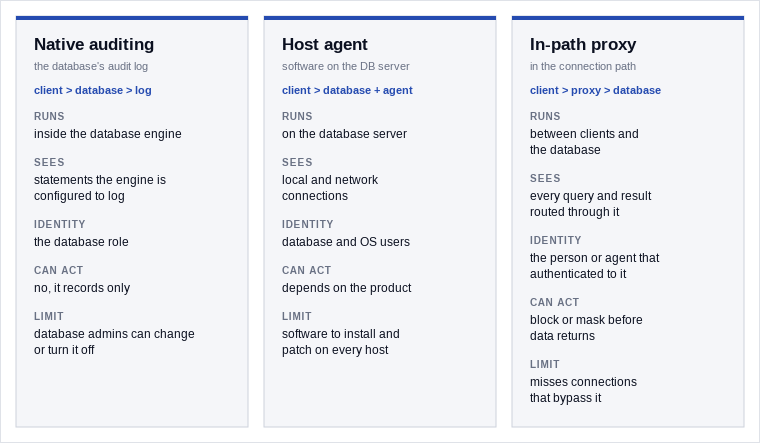
Database activity monitoring (DAM) records who ran each query, what came back and what policy did. Where to monitor, what to log, how to watch AI agents.
- What is database activity monitoring?
- How does database activity monitoring work?
- What should a DAM record hold?
- Shared accounts and the attribution problem
 SSL/TLS inspection
What is SSL inspection (TLS inspection)?
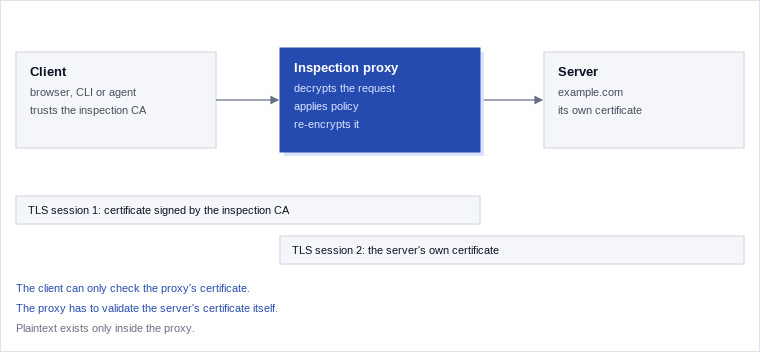
SSL inspection (TLS inspection) lets a proxy decrypt HTTPS, apply policy and re-encrypt it. How it works, which clients break, how to scope it for agents.
Zero standing privilegesWhat are zero standing privileges (ZSP)?
Zero standing privileges (ZSP) means no person or AI agent keeps privileged access between tasks. What standing access is, ZSP vs JIT, and where to start.
AI agent identityWhat is AI agent identity? Auth, owners, audit
AI agent identity is how an agent proves which agent it is and who it acts for. Authentication methods, delegation claims, token lifetimes and audit.
 CI/CD secrets management
: best practices
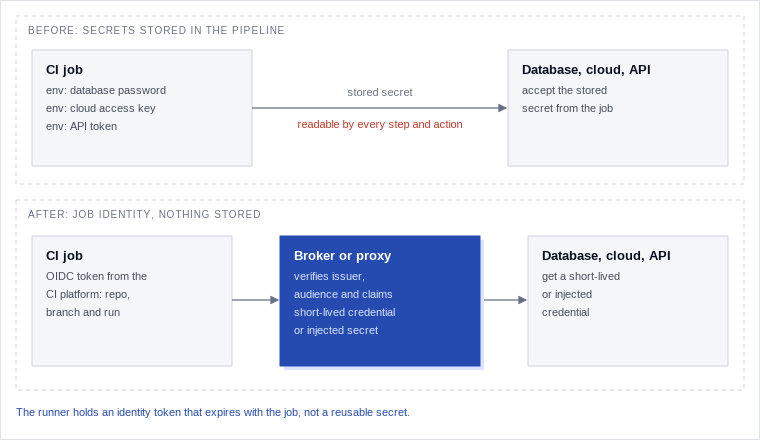
CI/CD secrets management best practices: where pipeline secrets leak, and how OIDC and a proxy keep cloud, database and SSH credentials off CI runners.
 Database security
: threats and best practices
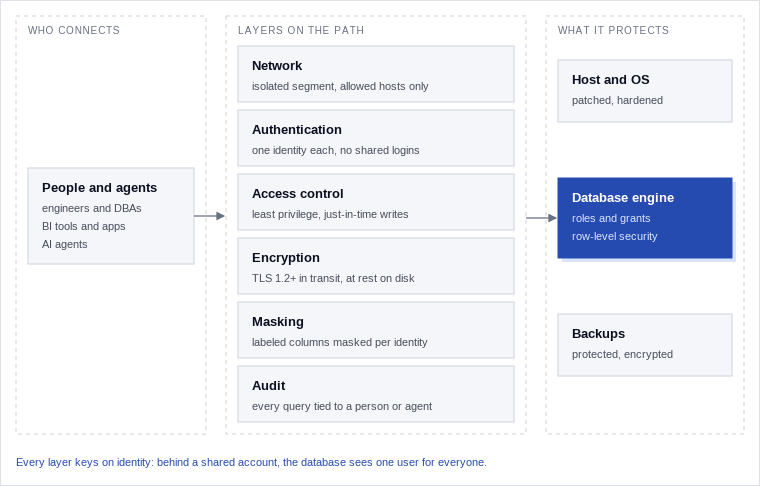
Database security protects data, the DBMS and every account that can query it. The threats that matter, AI agents included, and a best practices checklist.
 Bastion host
What is a bastion host? Jump servers explained
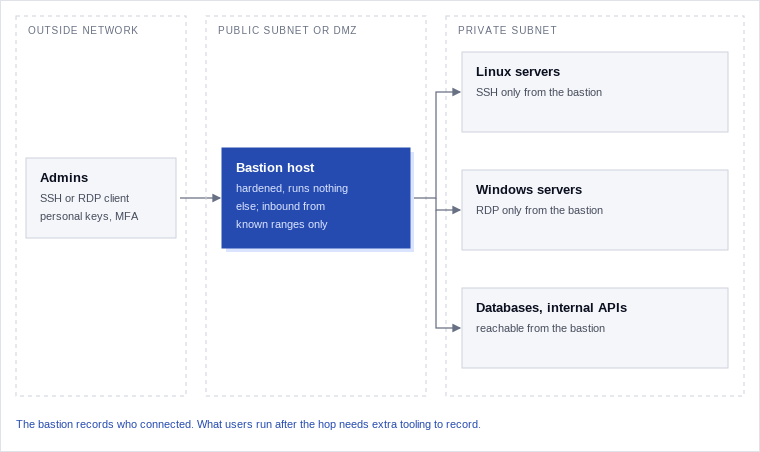
A bastion host (jump server) is the hardened server you SSH or RDP through to reach private hosts. How it works, where its audit stops, what replaces it.
 MCP vs API
: differences, auth and security
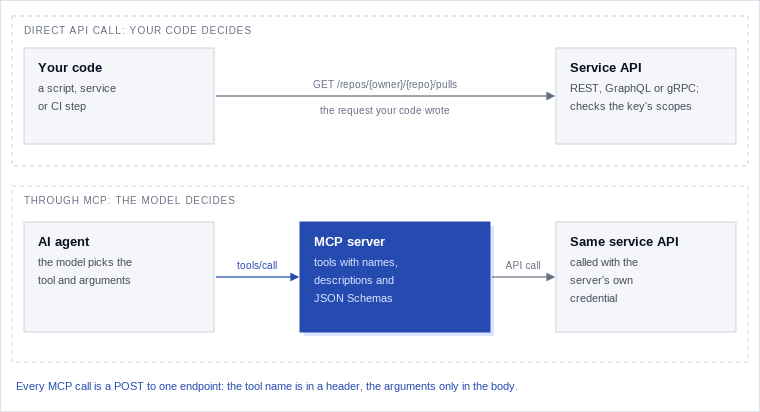
MCP vs API: an MCP server usually sits in front of an API so a model can list its tools and call them. Key differences, API keys vs OAuth, and security.
Bearer tokenWhat is a bearer token? JWT, DPoP and leaks
A bearer token is accepted from anyone who sends it. The Authorization: Bearer header, JWT vs opaque tokens, leaks from logs and AI agents, and DPoP.
 Open Policy Agent
: Rego and policy as code
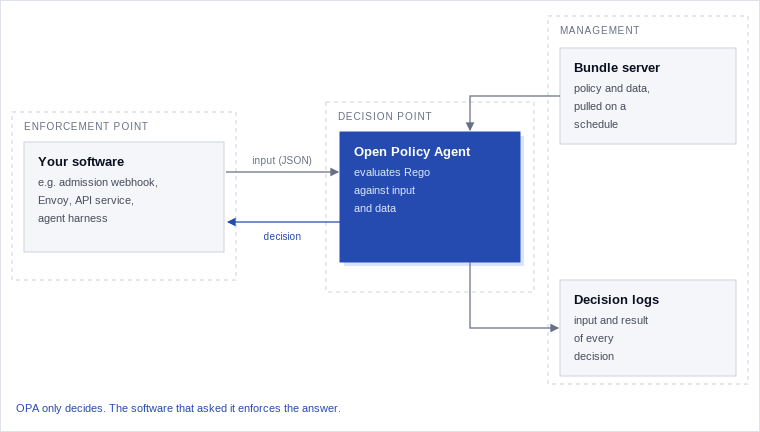
Open Policy Agent (OPA) is a free, open source policy engine that answers allow or deny in Rego. How it works, Gatekeeper, OPA vs Cedar and AI agents.
RAG vs MCPRAG vs MCP: key differences and security
RAG vs MCP: RAG pastes retrieved text into the prompt, MCP lets models call tools on live systems. How they differ, combine, and where each leaks data.
 Shadow AI
What is shadow AI? Examples, risks and MCP
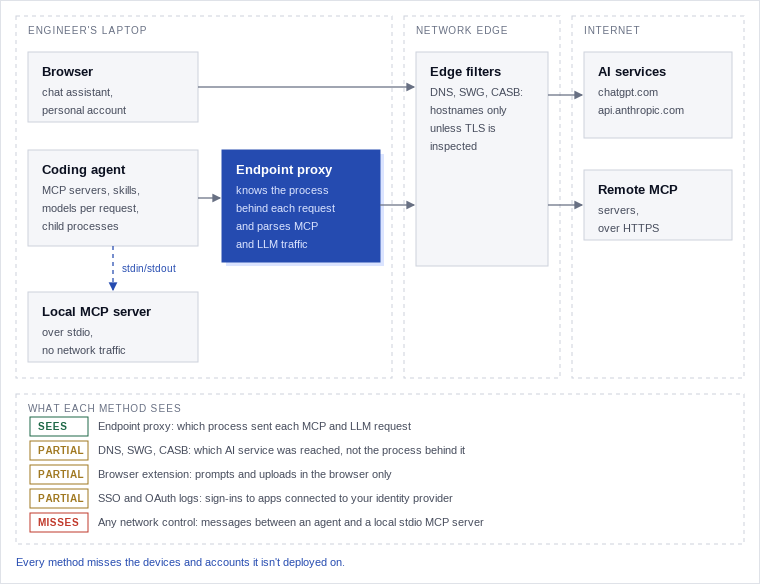
Shadow AI is AI used at work without approval: chat apps on personal accounts, but also coding agents, MCP servers and skills. Examples, risks, controls.
Egress filteringWhat is egress filtering? Rules for AI agents
Egress filtering decides which outbound traffic can leave a host or network. How it works, default deny vs permit, and how to apply it to AI agent traffic.
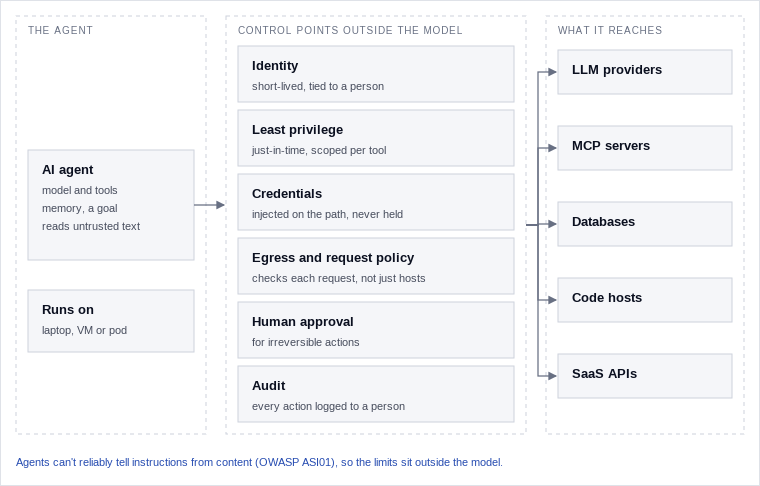 Agentic AI security
What is agentic AI security? Risks and controls
Agentic AI security keeps autonomous AI agents inside the access their owners intended. The OWASP agentic threats, and the controls outside the model.
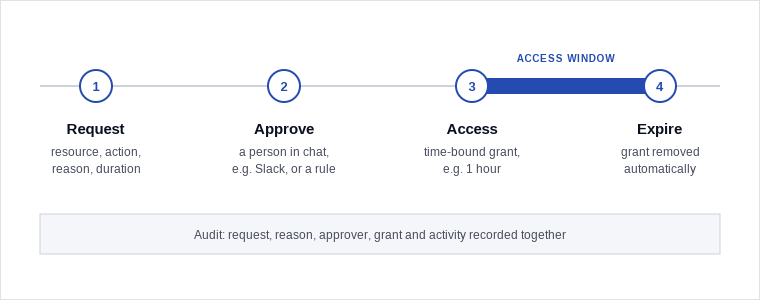 Just-in-time access
What is just-in-time (JIT) access?
Just-in-time access grants privileges only when needed and removes them when the task ends. How JIT access works, types, examples, and JIT for AI agents.
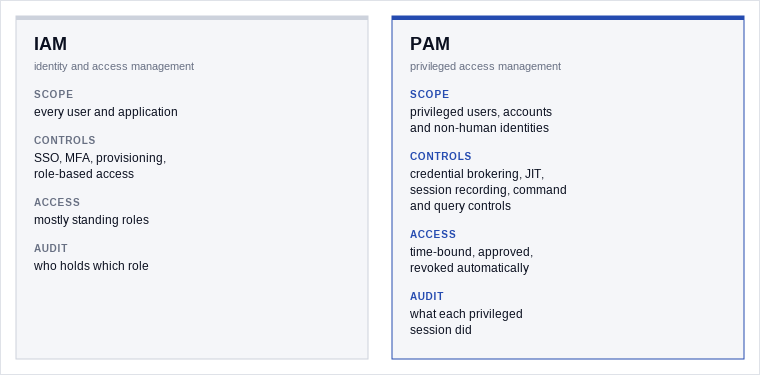 PAM
What is privileged access management (PAM)?
Privileged access management (PAM) controls and audits admin access to databases, servers and cloud. How PAM works, PAM vs IAM and PIM, and AI agents.
About the Academy
Each guide explains one access security concept in neutral terms: what it is, what problem it solves, and where it sits in an access architecture. Every one applies least privilege to engineers and AI agents alike.
The guides stay vendor-neutral. Where a concept maps to something Formal does, the guide links to it at the end, under Keep reading.
How Formal applies these concepts
- Formal PAMA PAM solution for databases, SSH and Kubernetes. Engineers and AI agents connect with their own identity and native clients. No shared credentials.
- Formal EndpointAI agent security at the network layer. Formal Endpoint is an egress proxy for laptops, VMs and Kubernetes that inspects agent traffic and keeps keys out.
- Formal PlatformAI access control and AI agent governance: one control plane for policies, identity, approvals and logs, enforced on laptops and in production.